Mechanisms of Electronic Space
The site where electronic space exists is memory. In the past, since this memory was installed in desktop computers, people had to go to where the computer was and run a program to access the electronic space loaded in memory. But as technology advanced, laptops and then smartphones were released, and wireless internet became available through Wi-Fi. We can now carry memory with us and connect to networks without being physically tethered to an Ethernet cable. The conditions for freely entering and exiting electronic space have been established.
So what new spatial experiences have become possible through this newly given site? Before implementing spaces ourselves, let us examine a few widely known examples.
Portal
A device that connects different spaces to one another. Through portals, we can move directly to places far away or travel to spaces that would be inaccessible without a portal.
Portals for Moving Between Maps
Portals to Visible Spaces
Loop
A method for implementing infinitely extending spaces. Just as music has repeat signs, could it be possible to create an endlessly continuing experience using only a limited amount of space?
Manifold Garden Case Study
Antichamber Case Study: Introduction
Superposition
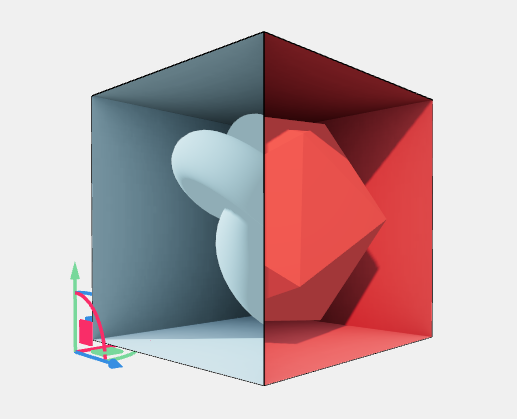
In electronic space, it is possible for multiple spaces to be superimposed at the same location. While in physical space only a single object can occupy a specific location, in electronic space multiple objects can exist at the same position. The concept in electronic space that corresponds to a physically unique location is a memory address. Only one piece of information can exist at a single address, and the moment you try to insert different information, the existing data is overwritten.
r3f magic box Case Study (PC access recommended)